Quick Market Summary: What Happened to the Stock Market Today?
“On Friday, June 5, 2026, U.S. stocks suffered one of their sharpest selloffs of the year as a hot jobs report, rising Treasury yields, and weakness in AI-related stocks hit investor confidence.”
The stock market today had a rough session, and the pain was not equally spread across every corner of Wall Street. The biggest damage came from technology, artificial intelligence, and semiconductor stocks, which had been some of the strongest winners during the recent market rally.
The S&P 500 fell about 2.6%, the Nasdaq dropped about 4.2%, and the Dow Jones Industrial Average declined around 1.4%, according to major market reports from Reuters and AP. Reuters also reported that Wall Street’s nine-week winning streak ended as investors reacted to a strong U.S. jobs report, higher rate-hike expectations, and a sharp selloff in chip stocks. In simple words, investors did not suddenly decide that every company in America was broken; they decided that prices had run very far, very fast, and one hot economic report was enough to shake confidence.
The main headline behind today’s stock market was this: good economic news led to bad market behaviour. That sounds strange at first, right? Normally, strong job growth should mean consumers have income, companies have customers, and the economy is still alive. But markets are weird little creatures. When investors see a strong jobs report amid sticky inflation, they often worry that the Federal Reserve may keep interest rates higher for longer or even raise them again. That is exactly what happened today.
The May jobs report showed 172,000 jobs added and unemployment holding at 4.3%, which was stronger than many economists expected. That report reduced hopes for easier Fed policy and pushed investors to sell riskier, high-valuation stocks first.
Major Index Moves: Nasdaq Got Hit the Hardest
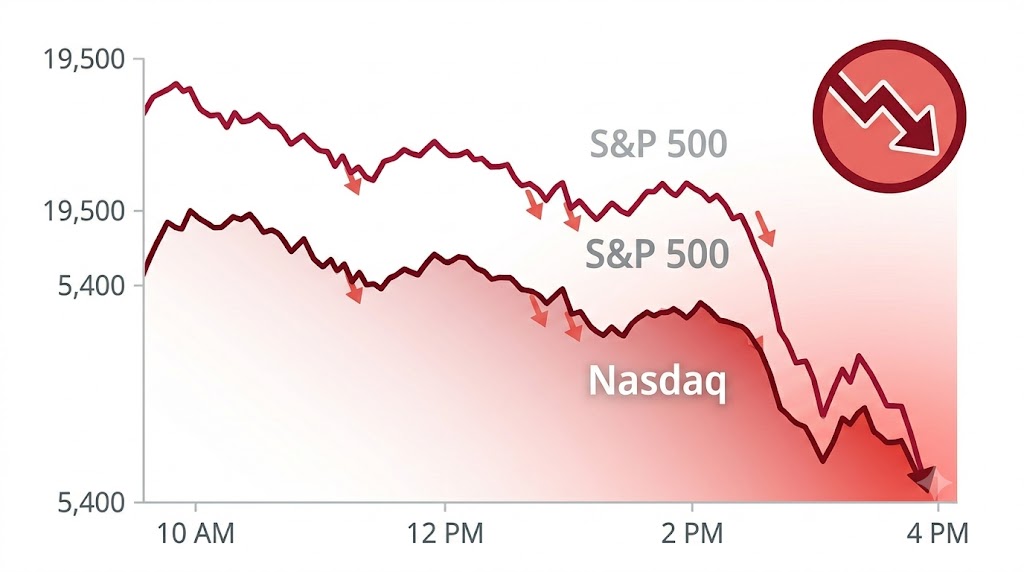
The Nasdaq was the weakest major index in the stock market today, and that matters because the Nasdaq is heavily tied to technology, growth stocks, and AI-related companies. When investors are excited about future growth, the Nasdaq can fly like a rocket. But when investors become worried about interest rates, valuations, or earnings expectations, that same rocket can come back down fast. Today’s Nasdaq fall of roughly 4.2% marked its worst one-day percentage drop since April 2025, according to Reuters, Barron’s, FT, and AP market coverage. The S&P 500 also suffered a major loss, while the Dow held up slightly better because it has more exposure to traditional sectors like healthcare, financials, and industrial companies.
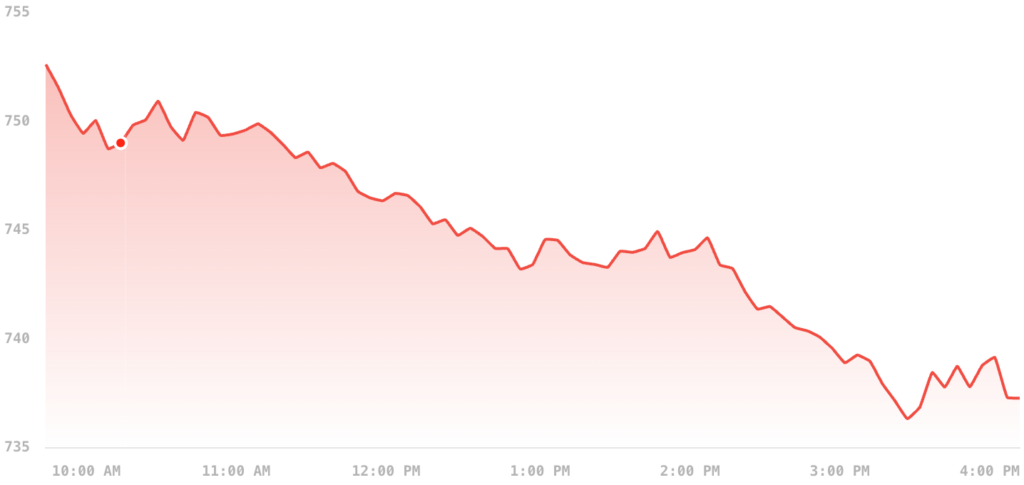
ETF data showed the same story in a practical way. SPY, the popular ETF that tracks the S&P 500, was trading at $737.55 after falling $19.77 from the previous close, while QQQ, the ETF closely tied to the Nasdaq-100, was at $705.06 after dropping $35.36. DIA, the ETF that tracks the Dow Jones Industrial Average, was at $509.70 after falling $7.05.
This tells us the stock market today was not just “down” in a general sense; it was a growth-stock and tech-led decline. QQQ fell much more sharply than DIA, which shows that investors were specifically punishing expensive growth names rather than dumping everything equally. That difference is important for readers because a falling market can mean many different things depending on which sectors are leading the move.
Why Investors Sold Stocks Today
Investors sold stocks today because three big worries hit the market at the same time: rate-hike fears, technology-stock weakness, and geopolitical inflation risk.
- The first worry came from the U.S. jobs report. Reuters reported that U.S. rate futures lifted the odds of a Federal Reserve rate hike by December after the strong May jobs data, with markets still expecting the Fed to hold rates steady at the June meeting but now pricing a higher chance of tighter policy later in the year. That is a big deal because growth stocks are often valued based on profits expected far into the future. When interest rates rise, those future profits become less attractive in today’s dollars, so investors often cut the prices they are willing to pay.
- The second worry came from the chip and AI trade. The stock market today showed how quickly investor mood can change when one popular sector becomes crowded. Reuters reported that the Philadelphia Semiconductor Index suffered a major drop and that large chipmakers including Nvidia, Intel, AMD, and Broadcom fell sharply. FT also reported that semiconductor weakness was at the center of the selloff, with investors reacting to higher bond yields and concerns that AI-related expectations had become too stretched. Think of it like a crowded elevator: when everyone wants to get out at the same time, even a small push can become chaos. That is what happened in the AI and chip trade today.
The Jobs Report Shock: Why Strong Hiring Hurt Stocks
The strongest trigger behind the stock market today was the May jobs report. The U.S. economy added 172,000 jobs in May, beating many forecasts, while the unemployment rate stayed at 4.3%. The Guardian reported that economists had expected around 80,000 jobs, while Reuters reported forecasts near 85,000, so the actual number came in much stronger than expected. Normally, this would sound like a win. More jobs can mean stronger households, stronger spending, and a lower chance of recession. But Wall Street often reacts less to whether a number is “good” in daily-life terms and more to what that number means for interest rates. If hiring is too strong, the Fed may worry inflation pressure is not cooling fast enough.
This is why the phrase “good news is bad news” became relevant again. A strong labor market gives the Federal Reserve less reason to cut rates and more reason to stay cautious. Reuters reported that rate futures raised the probability of a December rate hike after the jobs report, while Barron’s reported that the probability of a rate cut dropped sharply. That shift matters because investors had been enjoying a rally partly built on optimism that inflation would cool and rate pressure would ease. When the jobs number came in hot, that soft-landing dream suddenly looked less comfortable. The stock market today basically said, “Great, the economy is strong — but maybe too strong for cheaper money.”
Tech and AI Stock Selloff: The Market’s Favorite Trade Cracked
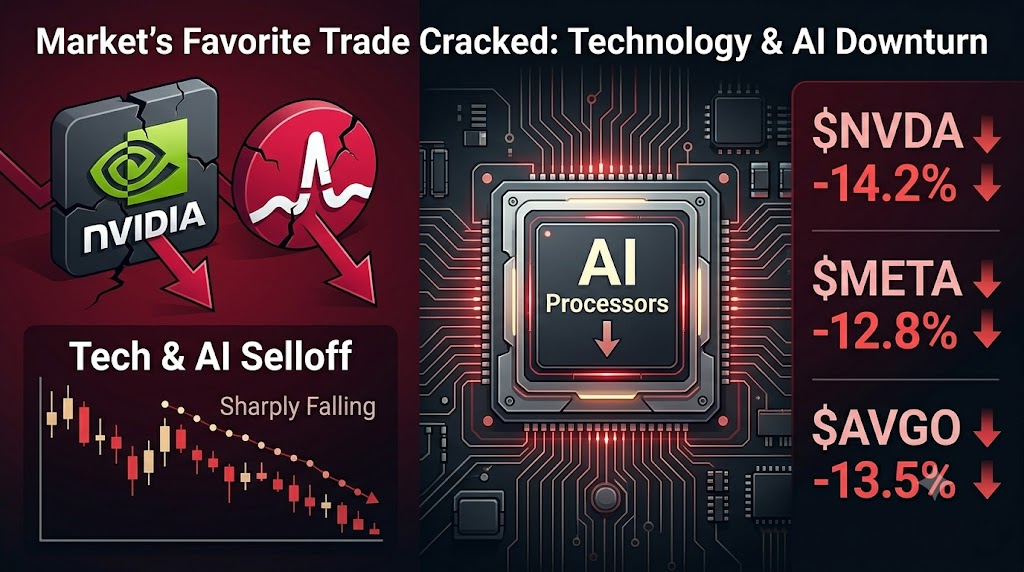
Technology and AI stocks were the heart of the selloff, and that is why the stock market today felt so dramatic. For months, investors had poured money into companies connected to artificial intelligence, cloud computing, advanced chips, data centers, and automation. When that kind of theme works, it can pull the whole market upward because the biggest tech companies carry huge weight inside the S&P 500 and Nasdaq. But that concentration cuts both ways. If those same leaders start falling, the index falls with them. AP reported that major tech companies including Nvidia, Broadcom, and Micron Technology saw steep losses, and Meta also fell amid stock-offering rumors.
The AI trade is not necessarily dead, but today was a reminder that even great long-term themes can have painful short-term corrections. A company can be important, profitable, and innovative — and its stock can still become too expensive in the short run. Barron’s reported that the Nasdaq’s drop was driven by AI stock weakness, rising bond yields, and concerns about future spending, while FT highlighted pressure in chip and memory stocks. This is the part beginner investors often miss: a good business and a good stock price are not always the same thing. The stock market today punished stocks where expectations were sky-high because investors started asking a basic question: “How much future growth is already priced in?”
Semiconductor Stocks Took the Biggest Hit
Semiconductors were hit especially hard in the stock market today, and that matters because chips are the engine under the hood of the AI boom. Data centers, smartphones, cloud platforms, electric vehicles, robotics, gaming systems, and AI models all need chips. So when semiconductor stocks fall hard, investors read it as a warning sign for the broader tech trade. Reuters reported that the Philadelphia Semiconductor Index lost significant market value, with major chip names falling between roughly 6% and 13%. That kind of move is not a small daily wiggle; it is a major reset in expectations. The selloff showed that investors were no longer willing to blindly pay any price for AI-related growth.
The chip selloff also had a psychological effect. When market leaders break down, investors often become more nervous about everything else. Broadcom’s earnings reaction earlier in the week had already made investors more cautious toward chip stocks, and today’s strong jobs report gave sellers another reason to press the button. TheStreet reported that the market focused heavily on the stronger-than-expected jobs report while semiconductor weakness wiped about $1 trillion from markets. That number sounds huge because it is huge, but it also reflects how massive the AI and semiconductor trade had become. When a sector becomes that important, even one bad day can feel like an earthquake.
Interest Rates and Treasury Yields: The Hidden Force Behind the Selloff
Interest rates were the invisible hand pushing the stock market today lower. When bond yields rise, stocks face competition from safer assets like Treasury securities. Investors start asking, “Why should I pay a premium for risky growth stocks if bonds are offering better returns?” That question hits high-growth technology stocks especially hard because their valuations depend heavily on future earnings. Reuters reported that the jobs report fueled rate-hike fears, and FT reported that the two-year Treasury yield climbed to around 4.17%, its highest level in 15 months. The two-year yield is important because it is sensitive to expectations for Fed policy. When it jumps, investors often assume the market is pricing in a tougher Fed.
The 10-year Treasury yield also moved higher, adding more pressure. Trading Economics reported that the U.S. 10-year Treasury yield rose to 4.52% on June 5, 2026, up 0.04 percentage points from the previous session. Higher long-term yields can weigh on everything from mortgage rates to corporate borrowing costs, and they can make expensive stocks look less attractive. This is why the stock market today was not just reacting to one number; it was reacting to a chain reaction. Strong jobs data led to higher rate expectations, higher rate expectations pushed yields up, and higher yields hit tech valuations. It is like a row of dominoes, and today the first domino fell early.
Why the Dow Fell Less Than the Nasdaq
The Dow fell today, but it did not fall as badly as the Nasdaq. That difference gives us a useful clue about the stock market today. The Dow includes more mature companies and is less concentrated in the high-growth tech names that dominate the Nasdaq. When investors become worried about higher rates, they often sell growth stocks first and rotate toward businesses that look more stable, cash-generating, or defensive. Reuters reported that investors turned defensive before the weekend as they watched both rate worries and Middle East tensions. AP also noted that although major indexes fell sharply, the biggest pressure came from major technology shares.
This does not mean Dow stocks are always safe or that old-economy companies cannot fall. It simply means today’s damage was concentrated where valuations were highest and expectations were most aggressive. A beginner investor can learn a lot from this. When the market is rising, people often say, “Stocks are going up.” But when the market starts falling, it becomes important to ask, “Which stocks are falling, and why?” The stock market today showed a clear split between high-growth technology names and more defensive areas. That split is called sector rotation, and it can happen quickly when investors move from risk-taking mode into risk-control mode.
Global and Geopolitical Pressure Added More Stress
The stock market today also faced pressure from global uncertainty. Reuters reported that investors were watching Middle East hostilities and oil-market risks, while earlier market coverage showed that flaring tensions had already contributed to inflation worries during the week. Geopolitical risk matters for stocks because it can affect oil prices, shipping routes, inflation, business confidence, and consumer spending. When energy costs rise, companies may face higher expenses and consumers may have less money left over after fuel and utility bills. Even if the market’s main trigger today was the jobs report, geopolitical tension added another layer of nervousness.
Markets hate uncertainty because uncertainty makes future profits harder to estimate. Imagine trying to plan a family budget when rent, fuel, groceries, and loan rates are all moving at the same time. Now imagine doing that for a giant company with global supply chains. That is why investors pay close attention to wars, oil prices, shipping routes, tariffs, and central bank policy. The stock market today was not just reacting to Wall Street emotion; it was reacting to real concerns about inflation staying sticky. If energy prices stay high and wages remain firm, the Fed may have a harder time declaring victory over inflation. That possibility makes investors more cautious about paying premium prices for stocks.
Sector Rotation: Where Investors Looked for Safety
When the stock market today turned ugly, investors did not treat every sector the same way. FT reported that investors shifted some money into defensive stocks such as Procter & Gamble and Coca-Cola, which are often viewed as steadier businesses during uncertain periods. Defensive companies usually sell products people continue buying even when the economy slows, such as household goods, beverages, medicine, utilities, or basic consumer staples. These stocks may not always produce explosive gains during a tech rally, but they can become more attractive when investors want stability. The market was basically saying, “I still want to be invested, but I want less drama.”
This rotation is normal and does not automatically mean a recession is coming. It can simply mean investors are reducing risk after a strong rally. Reuters reported that some analysts viewed the selloff as related to market positioning rather than a collapse in fundamentals. That is an important expert takeaway because it reminds readers not to confuse one bad market day with the end of capitalism. Stocks can fall sharply when expectations are too stretched, even if the economy is still growing. The stock market today looked scary, but part of the move may have been investors locking in profits from crowded winners and moving into safer corners before the weekend.
What This Means for Long-Term Investors
For long-term investors, the stock market today is a reminder that volatility is part of the deal. Stocks do not move in a straight line, especially after a strong winning streak. The S&P 500 had been on a nine-week winning streak before today’s decline, according to Reuters and AP. When markets climb for weeks, investors sometimes forget that pullbacks are normal. Then one strong economic report, one rate scare, or one earnings disappointment wakes everybody up. The key is not to panic every time the market drops, but to understand what changed and whether it affects your long-term plan.
A long-term investor should look at today’s selloff through a practical lens. Are you diversified, or are you overloaded in one hot sector? Do you own quality businesses or just chase whatever went up last month? Do you have an emergency fund, or would a market drop force you to sell investments at the worst time? These questions matter more than the daily headline. The stock market today punished concentrated tech exposure, but a balanced portfolio may have felt the hit differently. For beginners, the lesson is simple: do not build your whole financial life around one trend, even if that trend is as exciting as artificial intelligence. Markets reward patience, but they punish overconfidence.
Should Investors Buy the Dip After Today’s Market Drop?
“Buying the dip can be dangerous if you do not understand your time horizon, emergency fund, debt situation, and portfolio concentration.”
Many readers will look at the stock market today and ask the obvious question: should I buy the dip? The honest answer is that it depends on your time horizon, risk tolerance, cash needs, and portfolio allocation. A sharp selloff can create opportunities, but it can also be the beginning of more volatility. If you are investing for retirement over 10, 20, or 30 years, a one-day drop should not completely change your strategy. But if you were heavily concentrated in AI stocks, chip stocks, or leveraged funds, today may be a warning to review your risk. Buying blindly just because prices fell is not a strategy; it is emotion wearing a fake mustache.
A better approach is to use rules instead of panic. Some investors use dollar-cost averaging, meaning they invest a fixed amount regularly instead of trying to guess the perfect bottom. Others rebalance their portfolio when one sector becomes too large. Some keep extra cash for volatility, while others stay fully invested because they know market timing is difficult. The stock market today does not prove that stocks are doomed, and it does not prove that every dip is a bargain. It proves that valuation, interest rates, and investor expectations still matter. Before buying, ask whether the stock or ETF still fits your plan, not whether social media is yelling “crash” or “opportunity.”
What to Watch Next
After the stock market today, investors should watch four things carefully: inflation data, Federal Reserve comments, Treasury yields, and earnings from major technology companies. Inflation matters because it will influence whether the Fed can stay patient or feels pressure to tighten policy. Fed comments matter because investors will listen for any signal that policymakers are worried about strong job growth, sticky inflation, or financial-market risk. Treasury yields matter because higher yields can keep pressure on growth stocks. Earnings matter because AI-related companies now need to prove that huge spending and high valuations can turn into real profits.
The next few trading sessions may show whether today was a one-day reset or the start of a deeper correction. If yields calm down and tech buyers return, the market may stabilize. If yields keep rising and semiconductor stocks continue falling, the Nasdaq could remain under pressure. Investors should also watch whether defensive sectors keep outperforming, because that may signal a broader shift in market mood. The stock market today was not just about red numbers on a screen; it was about investors reassessing the price of risk. When risk becomes more expensive, the most expensive parts of the market usually feel it first.
Financial Disclaimer:
This article is for educational and informational purposes only. It is not financial, investment, tax, or legal advice. Stock market investing involves risk, including possible loss of principal. Always consider your financial situation, risk tolerance, and goals before making investment decisions. Speak with a qualified financial advisor if needed.
Conclusion
The stock market today fell sharply because a stronger-than-expected U.S. jobs report revived fears that the Federal Reserve may keep rates higher for longer or even raise rates later in 2026. The biggest damage hit technology, AI, and semiconductor stocks, which had already enjoyed a powerful rally and were vulnerable to profit-taking. The Nasdaq dropped the most, the S&P 500 ended its winning streak, and the Dow fell less because it is less concentrated in the most expensive growth names. Higher Treasury yields, rate-hike expectations, chip-sector weakness, and geopolitical uncertainty all worked together to create a tough day for investors.
For everyday investors, the lesson is not to panic but to pay attention. A market drop can feel scary, especially when headlines use words like “plunge,” “wipeout,” and “selloff.” But the smarter question is not “Is the market crashing?” The smarter question is “Does my portfolio still match my goals?” The stock market today reminded investors that diversification, patience, and risk management are not boring ideas — they are survival tools. Hot sectors can stay hot for a long time, but when expectations become too high, even one strong economic report can shake the whole trade.
FAQs
1. Why did the stock market fall today?
The stock market today fell because investors reacted negatively to a stronger-than-expected U.S. jobs report, which increased concerns that the Federal Reserve may keep interest rates higher for longer or raise rates later in the year. The selloff was especially sharp in technology and semiconductor stocks, where valuations had become stretched after a strong rally. Higher Treasury yields also made growth stocks less attractive. The Nasdaq took the biggest hit because it has heavy exposure to tech and AI-related companies.
2. Why did good jobs data hurt the market?
Good jobs data hurt the market because investors worried it could make the Federal Reserve more cautious about cutting rates. When hiring is strong and unemployment stays low, the Fed may worry that inflation pressure is still alive. That can lead to higher-for-longer interest rates, which usually hurts expensive growth stocks. So even though the jobs report was good for workers, it was uncomfortable for investors hoping for easier monetary policy.
3. Why did tech stocks fall more than the Dow?
Tech stocks fell more than the Dow because they are more sensitive to interest rates and valuation pressure. Many technology and AI stocks trade at high prices because investors expect strong future growth. When bond yields rise, those future earnings become less valuable in today’s terms. The Dow has more exposure to mature sectors, so it held up better than the Nasdaq during the stock market today selloff.
4. Is this stock market drop a crash?
Today’s decline was sharp, but one bad day does not automatically mean a full market crash. Reuters and AP described it as a major selloff that ended a strong winning streak, especially in tech-heavy areas of the market. A crash usually involves deeper, broader, and more sustained losses across many sectors. The stock market today looked more like a painful correction in crowded growth trades than a confirmed long-term collapse.
5. What should investors do after today’s stock market drop?
Investors should avoid emotional decisions and review their portfolio calmly. Check whether you are too concentrated in one sector, especially AI or semiconductor stocks. Make sure your emergency fund is separate from your investments, because forced selling during volatility can damage long-term returns. The stock market today is a reminder to stay diversified, rebalance when needed, and invest based on goals rather than daily headlines.
“Want to stay ahead of market moves? Check out our latest updates and deep dives in our Blog [ financewithdevel.com] section.”

“Hi, I am Devel Gupta, an entrepreneur and the founder of FinanceWithDevel. With 10 years of experience in teaching and simplifying personal finance, my mission is to help beginners build long-term wealth without the confusing jargon. Whether it’s budgeting, investing, or retirement planning, I believe financial freedom starts with simple, consistent habits. Let’s make money make sense. Connect with me on [ LinkedIn/Twitter ] for more daily tips!”