
Key takeaways
- Crosswise Life Insurance in the Netherlands can help some partners reduce inheritance tax exposure, but only when the policy is structured correctly.
- The key details are who owns the policy, who pays the premium, who is insured, and who receives the payout.
- It may be more useful for unmarried partners, cohabiting couples, blended families, and people with larger estates.
- Do not treat this as a quick loophole. Dutch tax rules are technical, and a notary or tax adviser should review the setup.
What is crosswise life insurance?
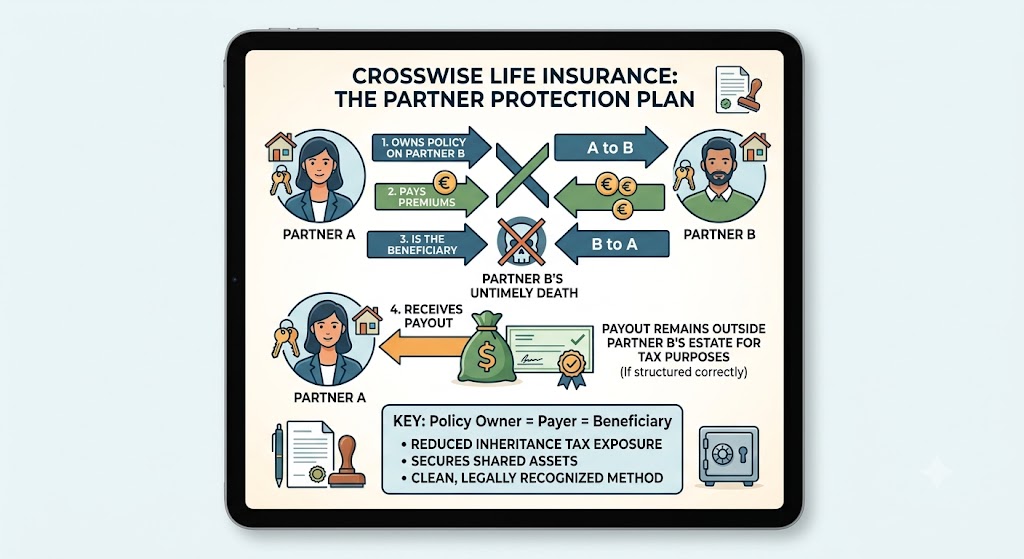
Crosswise Life Insurance in the Netherlands usually means two partners insure each other’s lives instead of each person simply insuring their own life. In plain English, Partner A takes out a policy on Partner B’s life, pays the premium, and is the beneficiary. Partner B does the same for Partner A. If one partner dies, the surviving partner receives the payout from a policy they owned and paid for.
The goal is not to hide money or avoid tax illegally. The goal is to structure the policy so the payout is less likely to be treated as part of the deceased person’s estate. That difference matters because Dutch inheritance tax can apply when a death benefit is linked to money paid from the deceased person’s own assets.
How crosswise life insurance may help with inheritance tax?
The tax logic behind Crosswise Life Insurance in the Netherlands comes down to control and payment. If the deceased person owned the policy or paid the premium for insurance on their own life, the payout may be pulled into the inheritance-tax calculation. If the surviving beneficiary owned the policy and was responsible for the premium, the result may be different.
Think of it like a business invoice. The name on the invoice, the person who pays it, and the person who receives the benefit all matter. With life insurance, the same details can affect whether the payout is seen as connected to the estate.
Why this matters in 2026
Crosswise Life Insurance in the Netherlands matters more in 2026 because many households have more wealth tied up in homes, pensions, savings, and business assets. Even couples who do not feel rich may have a taxable estate once property value and insurance payouts are added together. This can be especially important for people with mortgages, children from earlier relationships, or a partner who depends on one income.
The Netherlands also treats relationships differently for inheritance tax. Married partners, registered partners, cohabiting partners, and unmarried couples may not all be in the same position. A structure that works for one couple may not work for another.
Standard life insurance vs crosswise life insurance
| Feature | Standard life insurance | Crosswise life insurance |
| Policy owner | Often the insured person | Usually the other partner |
| Insured person | The policy owner’s own life | The partner’s life |
| Beneficiary | Partner, child, or estate | Usually the policy owner |
| Possible tax treatment | Payout may be linked to the estate if the insured paid premiums | Payout may stay outside the estate if structured correctly |
| Best for | Basic family protection | Estate planning for couples who need careful tax structure |
This table is simple, but the real paperwork matters. Crosswise Life Insurance in the Netherlands is not just a label. The policy document, premium payment records, relationship status, and marital-property rules all need to match the plan.
How to set it up correctly
Use this as a planning checklist, not a do-it-yourself legal manual:
- Review your relationship status. Are you married, registered partners, unmarried, or cohabiting with a contract?
- Check inheritance-tax exposure. Estimate your estate, property value, mortgage, savings, and existing insurance.
- Decide who owns each policy. Usually, each partner owns the policy on the other partner’s life.
- Decide who pays the premiums. The intended beneficiary should normally be responsible for the premium.
- Choose the insured person. Make sure the insured life and policy owner are correctly listed.
- Name the correct beneficiary. A wrong beneficiary can break the whole purpose.
- Keep proof of premium payments. Bank records and policy documents should support the structure.
- Review the plan with a Dutch expert. Use a notary, tax adviser, or licensed insurance specialist.
- Update after life changes. Marriage, divorce, children, a new home, or moving country can change the answer.
For most people, Crosswise Life Insurance in the Netherlands should be handled before there is a problem, not after a death. Once the insured person has passed away, you cannot repair sloppy ownership or payment records.
How to Calculate Your Coverage Need
Before setting up a crosswise policy, you need to know your target coverage amount. Finacewithdevel recommends using a simple formula based on your immediate debts and long-term family needs, rather than just picking a random number.
Step 1: Add Up Your Financial Obligations
Start by listing everything your family would need to pay off if you were no longer there:
- The Outstanding Mortgage: The exact amount left on your home loan so your partner can keep the house debt-free.
- Personal Debts: Any car loans, student loans, or credit card balances.
- Income Replacement: Multiply your annual net income by the number of years your family will rely on it (e.g., 5 to 10 years) to cover daily living costs, utilities, and groceries.
- Future Costs: Estimated expenses for children’s education or future major expenses.
Step 2: Subtract Your Existing Assets
Now, subtract the financial safety nets you already have in place:
- Current Savings & Investments: Cash in bank accounts or stocks that can be easily accessed.
- Existing Group Life Insurance: Any coverage provided automatically by your Dutch employer (like a partner pension or partnerpensioen).
The Final Calculation Formula
Your final insurance need is a straightforward equation:
{Total Financial Obligations} – {Total Existing Assets} = {Your Life Insurance Coverage Need}
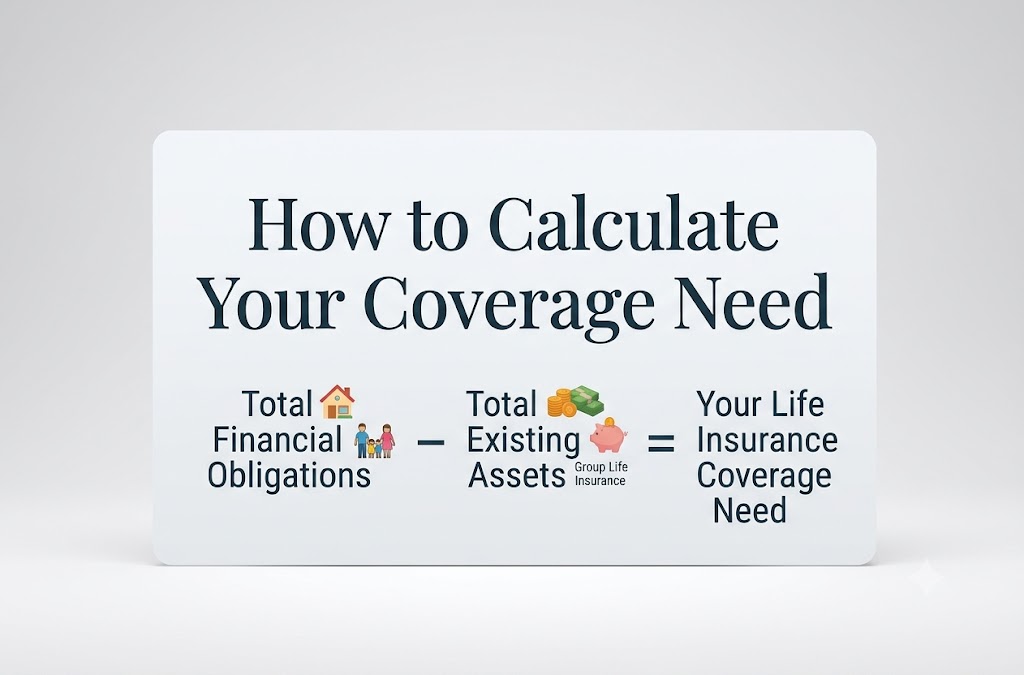
For example, if you have a €300,000 mortgage and want to provide €100,000 in income replacement, your total obligations are €400,000. If you have €50,000 in savings, your coverage need is €350,000.
Example: How it may work for a Dutch couple
Imagine Eva and Mark live together in Utrecht and have a mortgage. They want life insurance so the survivor can reduce the mortgage if one of them dies. In a standard setup, Mark might insure his own life and name Eva as beneficiary. If Mark also pays the premium from his own assets, the payout could be treated as connected to his estate.
With Crosswise Life Insurance in the Netherlands, Eva may own and pay for the policy on Mark’s life, while Mark owns and pays for the policy on Eva’s life. If Mark dies, Eva receives the payout from a policy she owned and funded. That may reduce inheritance-tax exposure, but only if the contract and payment setup are legally correct.
Pros and Cons of Crosswise Life Insurance
Evaluating the advantages and drawbacks can help you decide if crosswise life insurance fits your financial situation.
The Pros
- Reduces Inheritance Tax Exposure: The primary benefit is keeping the insurance payout completely outside the deceased partner’s taxable estate, potentially saving thousands in inheritance tax.
- Provides Immediate Liquidity: It delivers quick cash to the surviving partner when they need it most—especially useful if the majority of your wealth is locked up in a shared home or property.
- Protects Blended Families: Highly effective for unmarried couples, cohabiting partners, or blended families who don’t qualify for the same automatic tax exemptions as married couples.
- Secures the Mortgage: Ensures the surviving partner has the direct financial means to pay off or reduce the mortgage, allowing them to keep the home.
The Cons
- Strict Legal and Financial Setup: If you don’t structure the policy ownership and premium payments perfectly, the Belastingdienst will treat the payout as part of the estate anyway.
- Premium Payment Restrictions: Premiums must be paid from separate bank accounts. Couples married in full community of property (algehele gemeenschap van goederen) face extra hurdles because their assets are joint.
- Relationship Dependency: Since you own a policy on your partner’s life, managing or separating these policies can become complicated if the relationship ends in a breakup or divorce.
- Expat Tax Complications: If you hold assets in multiple countries or plan to move away from the Netherlands, other tax jurisdictions might still tax the global estate or the payout.
Common mistakes to avoid
- Naming the wrong beneficiary
- Letting the insured person pay the premium
- Paying premiums from a joint account without proper documentation
- Assuming a standard policy gives the same tax result
- Ignoring Dutch inheritance-tax exemptions
- Forgetting to update the policy after marriage, divorce, children, or buying property
- Treating online articles as a replacement for a Dutch notary or tax adviser
A small paperwork mistake can make Crosswise Life Insurance in the Netherlands less effective. The structure must be clean from the start.
Is Crosswise Life Insurance in the Netherlands legal?
Yes, Crosswise Life Insurance in the Netherlands can be part of legal estate planning when it is set up correctly. But readers should not treat it as a guaranteed tax-free trick. Dutch rules look at the full picture, including who was liable for the premium and whether the deceased person’s assets helped fund the policy.
The safest approach is to use it as one tool inside a wider estate plan. That plan may also include a will, cohabitation agreement, prenuptial or partnership terms, mortgage planning, and beneficiary reviews.
Final thoughts
Crosswise Life Insurance in the Netherlands can be useful for couples seeking life insurance protection and improved inheritance-tax planning in 2026. The idea is simple, but the execution is technical. The person who receives the payout should usually be the person who owns and funds the policy, and the paperwork should prove it.
Before setting up Crosswise Life Insurance in the Netherlands, check the latest 2026 rules with the Belastingdienst and speak with a Dutch notary, tax adviser, or licensed insurance specialist. Good planning is not about avoiding responsibility. It is about making sure your partner receives support without unnecessary tax surprises.
Disclaimer
This article is for educational purposes only and is not tax, legal, insurance, or financial advice. Dutch inheritance tax and life insurance rules can be complex and may change. Always consult a qualified Dutch notary, tax adviser, or licensed insurance professional before making decisions.
FAQs
What is crosswise life insurance?
It is a structure where partners insure each other’s lives. Each partner usually owns and pays for the policy on the other partner’s life.
Can crosswise life insurance reduce inheritance tax in the Netherlands?
It may reduce inheritance-tax exposure if the beneficiary owns the policy and is responsible for the premium. The result depends on the exact structure.
Is crosswise life insurance only for married couples?
No. It can also be relevant for registered partners, unmarried couples, cohabiting partners, and some expats. Relationship status still matters.
Who should pay the premiums?
Usually, the person who will receive the payout should be responsible for the premium. The policy and payment records should support that.
Do I need a Dutch notary or tax adviser?
Yes. For this topic, expert advice is worth it. A notary or tax adviser can check whether the insurance, relationship documents, and estate plan work together.
“For more personal finance tips and guides, visit our FinanceWithDevel Homepage.”

“Hi, I am Devel Gupta, an entrepreneur and the founder of FinanceWithDevel. With 10 years of experience in teaching and simplifying personal finance, my mission is to help beginners build long-term wealth without the confusing jargon. Whether it’s budgeting, investing, or retirement planning, I believe financial freedom starts with simple, consistent habits. Let’s make money make sense. Connect with me on [ LinkedIn/Twitter ] for more daily tips!”