Why This Money Question Matters More in 2026
The debate around Emergency Fund vs Savings Account in 2026 is not just a small personal finance topic anymore. For many Americans, it is the difference between handling a surprise bill calmly and putting that bill on a high-interest credit card. The financial environment in 2026 is still uncomfortable for households because prices remain elevated, interest rates are higher than they were during the ultra-low-rate years, and many people are trying to rebuild savings after years of inflation pressure. According to the Federal Reserve’s 2025 household well-being report released in May 2026, 63% of adults said they could cover a $400 emergency using cash, savings, or a credit card paid off at the next statement, while 73% said they were doing okay or living comfortably financially. That sounds decent at first glance, but it also means a large share of Americans remain financially vulnerable when life throws a curveball.
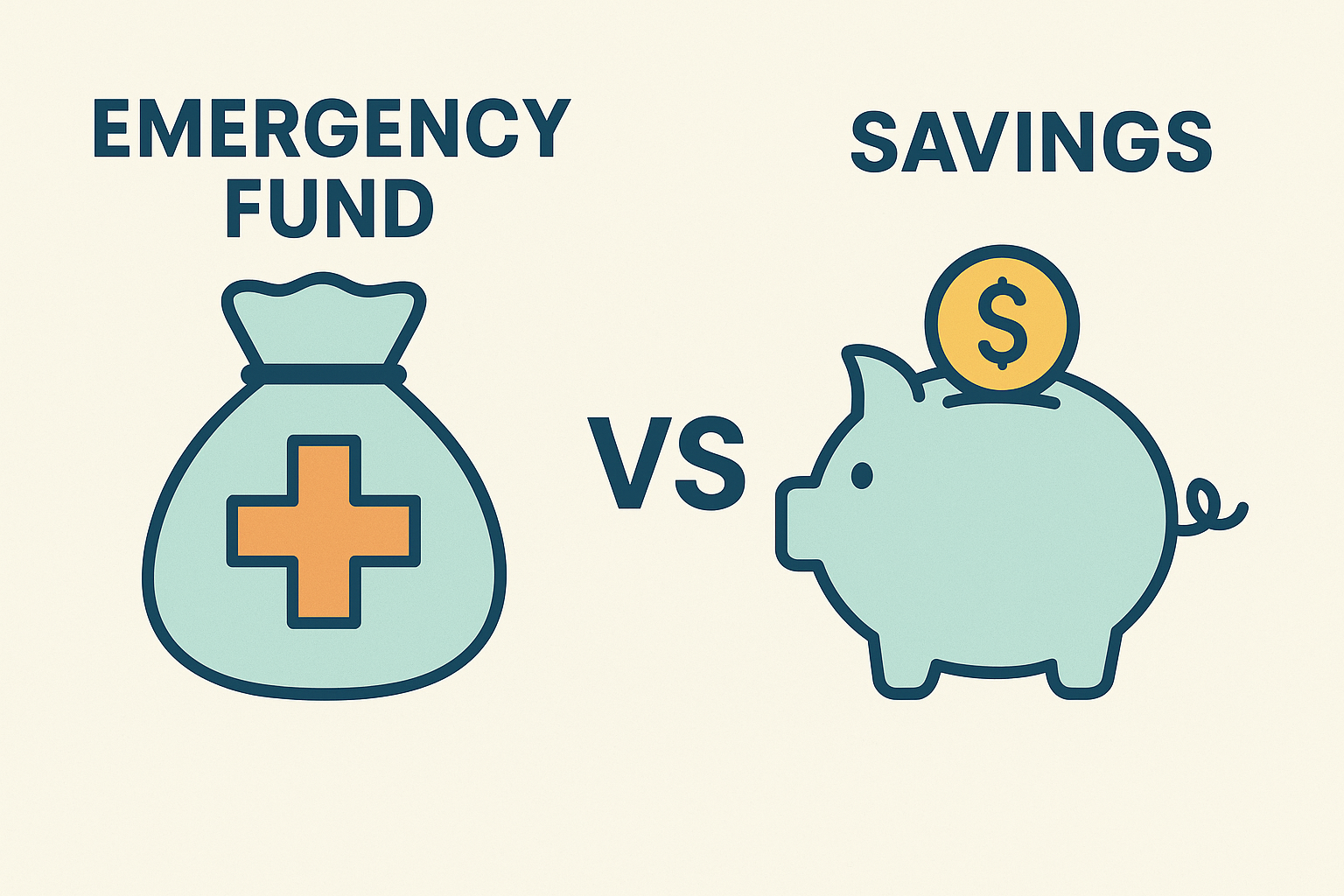
The reason Emergency Fund vs Savings Account in 2026 matters is simple: people often mix up the tool with the purpose. A savings account is a place where money sits. An emergency fund is a job assigned to money. Think of it like a garage and a car. The garage stores the car, but the car is what actually takes you somewhere. In the same way, a savings account may store your money, but your emergency fund is the specific pile of cash meant to protect you from medical bills, job loss, car repairs, home repairs, or any expense that can’t politely wait until payday.
The 2026 Backdrop: Inflation, Rates, and Cash Safety
Any serious discussion about Emergency Fund vs Savings Account in 2026 has to start with the economy. The Bureau of Labor Statistics reported that the Consumer Price Index rose 3.8% over the 12 months ending April 2026, with food up 3.2% and energy up 17.9% over the year. That matters because emergency savings are not only about having money available; they are also about preserving purchasing power. If your money earns almost nothing while prices rise, your emergency fund slowly loses strength, like a phone battery draining in your pocket even when you are not using it.
Interest rates also shape the answer. The Federal Reserve’s target range was 3.50% to 3.75% after the April 2026 FOMC decision, and higher rates have helped many online savings accounts pay much more than traditional bank savings accounts. As of late May 2026, some high-yield savings accounts were advertising rates around 4% to 5% APY, while traditional savings averages were far lower depending on the survey or dataset used. This is why the answer to Emergency Fund vs Savings Account in 2026 is not “choose one.” The smarter answer is: keep your emergency fund inside the right kind of savings account.
Emergency Fund vs Savings Account in 2026: What’s the Real Difference?
The easiest way to understand Emergency Fund vs Savings Account in 2026 is to separate purpose from location. An emergency fund is money reserved only for unexpected, necessary expenses. A savings account is a financial container offered by a bank or credit union. You can use a savings account for emergency money, vacation money, home down payment money, tax money, or even a future car purchase. But if all these goals are mixed together in one account, things can get messy quickly. You may think you have $8,000 saved, but if $3,000 is for taxes, $2,000 is for a trip, and only $3,000 is for emergencies, your real emergency fund is much smaller than it looks.
The Consumer Financial Protection Bureau describes an emergency fund as a cash reserve set aside for unplanned expenses or financial emergencies, including car repairs, home repairs, medical bills, or loss of income. That definition is clean and practical. Your emergency fund should not be treated like “extra money.” It should not be used for holiday shopping, a phone upgrade, a vacation, or a random sale that looks too tempting to ignore. A savings account, on the other hand, is simply where you may choose to park that money so it stays safe, separate, and accessible.
What an Emergency Fund Really Means
When people search for Emergency Fund vs Savings Account in 2026, they usually want to know where to keep their money. But before location comes behavior. An emergency fund is a financial shock absorber. You do not build it because you expect something bad to happen tomorrow; you build it because something expensive eventually happens to almost everyone. A tire blows out. A tooth starts hurting. A pet needs urgent care. A laptop dies during work season. A job becomes unstable. Life does not always send calendar invites before it gets expensive.
A good emergency fund has three qualities: it is safe, liquid, and separate.
- Safe means it should not be exposed to stock market swings.
- Liquid means you can access it quickly without waiting days or paying harsh penalties.
- Separate means it should not sit in the same mental bucket as your spending money.
This is where Emergency Fund vs Savings Account in 2026 becomes clear: the emergency fund is the mission, and a high-yield savings account is often the best base camp for that mission.
What a Savings Account Actually Does
A savings account is designed to hold cash while usually paying some interest. In 2026, the type of savings account matters a lot. A traditional savings account at a large brick-and-mortar bank may pay very little compared with online high-yield savings accounts. Bankrate’s May 2026 savings-rate data showed a national average savings yield of 0.61% APY, while many leading high-yield savings accounts were paying around 4% APY. Forbes’ May 2026 list also showed several high-yield savings accounts with APYs above 3%, and some promotional or requirement-based accounts higher than that.
This difference matters because your emergency fund might sit untouched for months or years. If you keep $10,000 in an account earning almost nothing, your money is technically safe but not working very hard. If you keep it in an FDIC-insured high-yield savings account, it may stay accessible while earning a meaningful return. That is the sweet spot in the Emergency Fund vs Savings Account in 2026 discussion: safety first, access second, yield third. Never chase yield so aggressively that you sacrifice safety or liquidity.
Where Should Americans Keep Emergency Money in 2026?
The best place for most Americans to keep emergency money in 2026 is a “separate FDIC-insured high-yield savings account“. This gives you a clear boundary between daily spending and emergency savings. FDIC insurance currently covers $250,000 per depositor, per FDIC-insured bank, per ownership category, which is more than enough for most household emergency funds. If you use a credit union, look for equivalent NCUA insurance. The key idea is simple: your emergency fund should be protected from bank failure, easy to access, and not exposed to market losses.
For Emergency Fund vs Savings Account in 2026, a high-yield savings account usually wins over a checking account for the main emergency fund because it may pay a much better rate. But checking still has a role. You can keep a small buffer in checking for instant expenses, such as a debit-card payment, urgent bill, or ATM cash need. Then keep the larger emergency fund in high-yield savings. This two-layer system is practical because it gives you both speed and earnings.
Emergency Fund vs Savings Account in 2026 Comparison Table
| Feature | Emergency Fund | Savings Account |
|---|---|---|
| Main purpose | Protects you from unexpected expenses | Stores money for different goals |
| Best use | Job loss, medical bills, car repair, home repair | Emergency fund, vacation fund, tax fund, goal savings |
| Where it can sit | High-yield savings, checking buffer, cash reserve | Bank or credit union account |
| Risk level | Should be very low risk | Depends on account type and insurance |
| Access | Should be quick | Usually quick, but transfer times vary |
| Return | Depends on where you keep it | Traditional savings may be low; high-yield savings may be higher |
| Ideal setup in 2026 | Separate HYSA + small checking buffer | Use multiple savings buckets for goals |
| Should it be invested? | Usually no | Not applicable unless moved to investment account |
This table shows why Emergency Fund vs Savings Account in 2026 is not a fight between two equal products. It is more like comparing “food storage” with “a refrigerator.” One is the purpose, the other is the container. You need both, but you need to use them correctly.
How Much Emergency Fund Should Americans Keep?
A common rule is to keep three to six months of essential expenses in your emergency fund, but that rule should be adjusted based on your real life. Someone with a stable job, low debt, and two household incomes may not need the same cash cushion as a freelancer, single parent, commission-based worker, or small business owner. “If you are still unsure about the right amount, check this detailed guide on how much emergency fund Americans should save in 2026. “
It explains different emergency fund targets based on income, monthly expenses, job stability, family size, and financial risk.The right emergency fund is not the one that sounds impressive online. It is the one that lets you sleep at night without overloading your financial life with idle cash.
For beginners, the first target can be $500 to $1,000. That may not solve every emergency, but it can stop a small problem from becoming a credit-card problem. After that, aim for one month of essential expenses, then three months, then six months. In the Emergency Fund vs Savings Account in 2026 conversation, this matters because the more cash you hold, the more important the account rate becomes. A $500 fund earning low interest is not a big issue. A $25,000 emergency fund earning almost nothing is a missed opportunity.
Starter Emergency Fund
A starter emergency fund is the first layer of protection. For many Americans, this should be built before aggressive investing, before upgrading lifestyle, and before making extra payments on low-interest debt. Why? Because without cash, every surprise expense can become debt. If your car needs a $700 repair and you have no emergency savings, the repair may go on a credit card. If that card charges a high interest rate, the emergency keeps costing you long after the car is fixed.
In 2026, a starter fund should ideally sit somewhere easy to reach but not too easy to spend. A separate high-yield savings account works well because it creates a small pause before spending. That pause is useful. It keeps you from treating emergency money like weekend money. This is one of the most underrated lessons in Emergency Fund vs Savings Account in 2026: friction is not always bad. A little separation can protect your future self from your impulsive present self.
Three to Six Months of Expenses
Once the starter fund is ready, the next goal is three to six months of essential expenses. Essential expenses include rent or mortgage, utilities, groceries, insurance, minimum debt payments, transportation, and basic medical needs. They do not include luxury shopping, vacations, or restaurant spending. The point is to calculate what it costs to keep your household running during a difficult period, not what it costs to maintain your best lifestyle.
For example, if your essential monthly expenses are $3,500, a three-month emergency fund is $10,500 and a six-month fund is $21,000. In that case, Emergency Fund vs Savings Account in 2026 becomes a serious account-selection decision. Keeping $21,000 in a low-yield account could mean losing hundreds of dollars in potential annual interest compared with a strong high-yield savings account. The money still needs to stay liquid, but it does not need to sit lazily.
Bigger Emergency Funds for Unstable Income
Some Americans should keep more than six months of expenses. If you are self-employed, work in a volatile industry, rely on commissions, support dependents, have large medical risks, or own a home with aging systems, a bigger cushion can make sense. A homeowner with an older roof and one income has a very different risk profile from a renter with two stable salaries in the household. Personal finance is personal for a reason.
For people with unstable income, the Emergency Fund vs Savings Account in 2026 decision may include multiple layers. You might keep one month in checking, five months in high-yield savings, and extra conservative savings in short-term Treasury bills or CDs. The goal is not to make your emergency fund complicated. The goal is to match access with timing. Money you might need tomorrow belongs in checking or savings. Money you might need six months from now can sit somewhere slightly less liquid if the return is better and the risk remains low.
Where Should Extra Savings Go After the Emergency Fund?
After your emergency fund is complete, do not keep piling unlimited cash into the same account without a plan. Extra savings should be assigned to goals. Short-term money can stay in high-yield savings. Medium-term money may go into CDs, Treasury bills, or I Bonds depending on timing and liquidity needs. Long-term money may belong in retirement accounts or taxable investment accounts. This is where many people get stuck: they build cash, feel safe, and then accidentally let too much money sit on the sidelines for years.
In 2026, CDs and Treasury bills may be useful for money you do not need immediately. But they are not always ideal for the core emergency fund because access can be slower or penalties may apply. I Bonds are attractive for inflation protection, but they cannot be redeemed during the first 12 months, which makes them unsuitable for your first layer of emergency savings. TreasuryDirect says I Bonds issued from May 1, 2026, through October 31, 2026, earn a 4.26% composite rate for the first six months, including a 0.90% fixed rate, but the one-year lockup matters.
CDs, Treasury Bills, and I Bonds
CDs can work well for planned savings, such as a car purchase or home down payment, especially if you know when you will need the money. Treasury bills can also be useful for conservative savers who want government-backed short-term yield. But neither should replace the instantly accessible part of your emergency fund. Emergencies are rude. They do not wait for maturity dates.
I Bonds are another interesting option in 2026 because inflation remains a concern, but they are better for backup reserves than first-line emergency cash. The Treasury clearly states that I Bond rates change every six months and are based partly on inflation. That makes them useful in some inflationary periods, but the redemption rules make them less flexible than a high-yield savings account. In the Emergency Fund vs Savings Account in 2026 decision, I Bonds can be a supporting actor, not the main character.
Common Mistakes Americans Should Avoid
The biggest mistake is keeping emergency money in a regular savings account without checking the rate. Many people stay with the same bank for years because it feels familiar, even when their savings earn almost nothing. Loyalty is nice in friendships, but not always in banking. If another FDIC-insured account pays meaningfully more and has no monthly fees, your money deserves a raise.
The second mistake is investing the emergency fund in stocks, crypto, or long-term bond funds. That may look smart during good markets, but an emergency fund is not meant to maximize returns. It is meant to be there when life gets ugly. If the market drops 25% right when you lose your job, your “emergency fund” has failed at its only job. This is the heart of Emergency Fund vs Savings Account in 2026: emergency money should be boring. Boring is beautiful when rent is due.
The third mistake is mixing all savings goals together. If your vacation money, tax money, and emergency money are in the same account, you may accidentally overspend. Use separate buckets or separate accounts. Label one “Emergency Fund” and do not touch it unless the situation is truly urgent, necessary, and unexpected.
Conclusion
Emergency Fund vs Savings Account in 2026 is not really a question of which one is better. An emergency fund is the purpose. A savings account is one of the best places to keep it. For most Americans, the smartest setup is a small checking buffer for immediate needs, a separate FDIC-insured high-yield savings account for the main emergency fund, and then other tools like CDs, Treasury bills, or I Bonds for extra savings that are not needed right away.
The best emergency fund is safe, liquid, separate, and boring. It should not chase risky returns. It should not be trapped behind penalties. It should not be mixed with everyday spending. In 2026, with inflation still pressuring budgets and high-yield savings accounts offering better rates than traditional accounts, Americans should make their emergency cash work harder while keeping it protected. That is the real answer to Emergency Fund vs Savings Account in 2026: keep the emergency fund in the right savings account, then give every extra dollar a clear job.
FAQs
1. Is an emergency fund the same as a savings account?
No. An emergency fund is money reserved for unexpected expenses, while a savings account is a place to store money. In Emergency Fund vs Savings Account in 2026, the emergency fund is the purpose and the savings account is the container.
2. Where should I keep my emergency fund in 2026?
Most Americans should keep their emergency fund in a separate FDIC-insured high-yield savings account. It should be easy to access, protected, and not exposed to market risk.
3. How much emergency fund should I have?
A good target is three to six months of essential expenses. Beginners can start with $500 to $1,000 and build from there.
4. Should I invest my emergency fund?
Usually, no. Your emergency fund should not be invested in stocks, crypto, or risky assets because you may need it during a bad market.
5. Are I Bonds good for emergency savings?
I Bonds can be useful for extra backup savings, but they are not ideal for your first emergency fund layer because they cannot be redeemed during the first 12 months.
Educational purpose only: This article is for general personal finance education and should not be treated as personalized financial advice.

“Hi, I am Devel Gupta, an entrepreneur and the founder of FinanceWithDevel. With 10 years of experience in teaching and simplifying personal finance, my mission is to help beginners build long-term wealth without the confusing jargon. Whether it’s budgeting, investing, or retirement planning, I believe financial freedom starts with simple, consistent habits. Let’s make money make sense. Connect with me on [ LinkedIn/Twitter ] for more daily tips!”